
What Unusual Visual Behavior Really Means in Toddlers
- Nikki McRory, MA CCC-SLP, BCBA

- Jul 31, 2025
- 4 min read
Updated: Dec 9, 2025
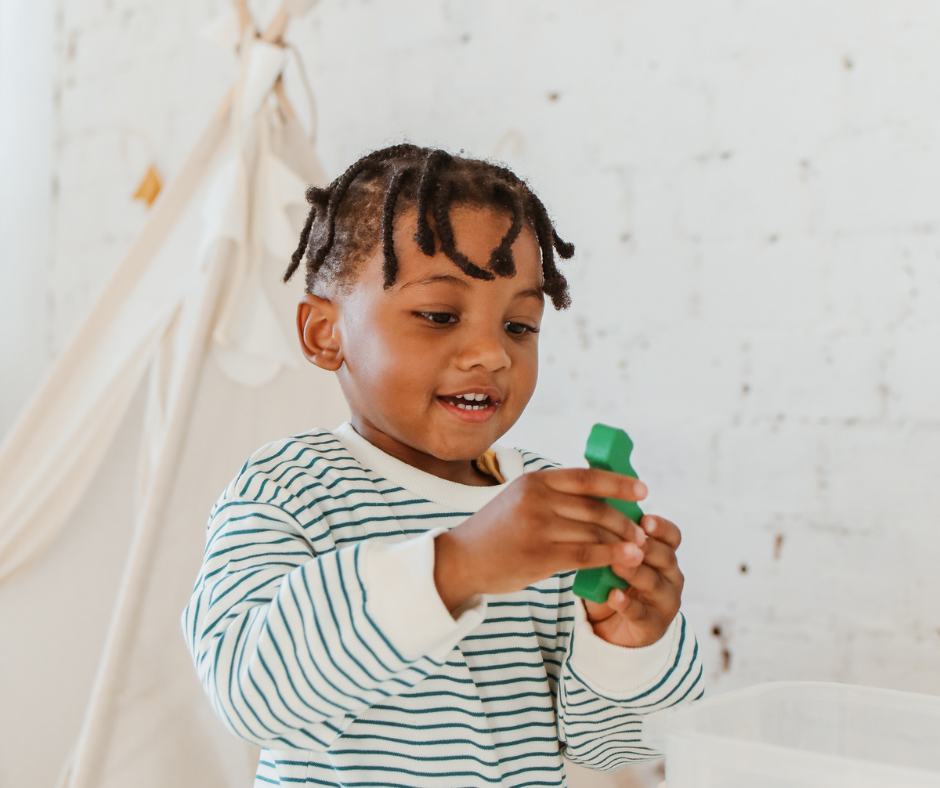
Have you ever caught your toddler mesmerized by a ceiling fan, transfixed by the spin of a toy wheel, or fascinated by light flickering through blinds? You're not alone. Many parents bring up these kinds of behaviors during early childhood check-ins, asking the same thoughtful question:
“Is this just a quirky phase—or something more?”
At McRory Pediatric Services, we know how important it is to honor every child’s unique way of exploring the world. And we also know how confusing it can be to tell the difference between typical curiosity and early signs that may warrant a closer look. In this post, we’ll explore what unusual visual behaviors might mean in toddlers—and how you can gently support their development while respecting their individuality.
What Is Unusual Visual Behavior in Young Children?
Toddlers are naturally curious—especially when it comes to movement, light, and sound. But when a child becomes repeatedly absorbed by certain visual patterns, parents may notice behaviors such as:
• Prolonged staring at spinning objects (like wheels or fans)
• Fixating on reflections or shadows
• Watching their own hands or fingers move repeatedly
• Lining up objects and observing them intensely
These are sometimes referred to as visual fixations or visual inspection behaviors. While they can occur in typically developing children, they may also be early indicators of sensory differences, especially when paired with limited social engagement or delayed communication.
Why Visual Fixation May Be Meaningful
Research shows that certain visual behaviors in infancy and toddlerhood may be early signs of neurodevelopmental differences, including autism. Studies have found that children who go on to receive an autism diagnosis often show increased attention to visual patterns and reduced social attention as early as 9 to 12 months of age (Ozonoff et al., 2010; Zwaigenbaum et al., 2005).
But it’s important to pause here: One behavior alone doesn’t equal a diagnosis. Instead, it’s one part of a larger developmental picture. When we consider these behaviors in context, we gain a clearer understanding—and can better support a child’s journey toward connection and communication.
When Should You Pay Closer Attention?
It’s helpful to look beyond the behavior itself and observe how it affects your child’s day-to-day engagement. Consider the following questions:
• Is your child so visually focused that they miss opportunities to engage with people or toys?
• Do they respond to their name by 12 months?
• Are they pointing or showing objects to share interest by 18 months?
• Is visual fixation interfering with play, imitation, or language learning?
If you find yourself answering “yes” to several of these questions, it may be worth consulting a pediatric specialist who can guide next steps in a supportive, affirming way.

How Can You Support Social Engagement at Home?
At McRory Pediatrics, we take a strengths-based approach that builds on your child’s interests—instead of trying to eliminate them. Here are some ways you can use their visual focus as a bridge to connection:
💡 Join Their Play: If your child is fascinated by spinning wheels, get on the floor with them and spin the wheels together. Talk about what they’re seeing: “Wow, it’s going so fast! Let’s count how many times it spins."
”🎯 Expand the Play: Use the moment to add something new—place a toy animal on the spinning surface or start a flashlight game that involves turn-taking. This introduces variety and social participation.
🤝 Build Joint Attention: Gently try to shift their gaze from the object to you and back again. For example, say: “I see it spinning—can you show me again?” This back-and-forth exchange lays the foundation for shared attention, a key ingredient in social communication.

When to Seek Support—and What That Can Look Like
If you're noticing that your child’s visual interests are paired with delays in communication, play skills, or social engagement, early intervention can make a meaningful difference. Seeking support doesn’t mean something is wrong—it means you’re proactively helping your child thrive.
Our team at McRory Pediatric Services specializes in:
• Speech and language evaluations
• Naturalistic therapies like JASPER, which use play and routines to build engagement
• Parent coaching to help you feel empowered at home
We’re here to walk alongside you, wherever you are on this journey.
A Final Word: Every Child Sees the World in Their Own Way
For many neurodivergent children, visual fixation isn’t just about what they see—it’s about how they process the world around them. Each brain interprets sensory input in its own unique way. Some children are visual seekers, drawn to movement, light, or contrast to help regulate their internal state. Others may visually focus to block out overwhelming sounds or social expectations.
When we understand these sensory preferences, we shift the narrative. Instead of asking, “How do I stop this?” we begin asking, “What is this helping them do?” Children experience the world through all their senses—and some may be more visually attuned than others. That’s not a problem to solve. It’s an invitation to observe, to join them where they are, and to help them connect in ways that feel meaningful and safe.
Whether your child communicates with words, gestures, signs, or smiles, they are always telling us something. When we meet them with curiosity and support, amazing things happen. That mindset—rooted in compassion, flexibility, and connection—is at the heart of everything we do at McRory Pediatric Services.
💬 Let’s Talk
Have questions about your child’s development? We’re here for you.
📞 Call us at (818) 530-5140 (Tarzana) or (661) 888-1135 (Santa Clarita)
🌐 Visit www.mcrorypediatrics.com to schedule a free consultation or evaluation.


